When Craft Becomes a Dialogue
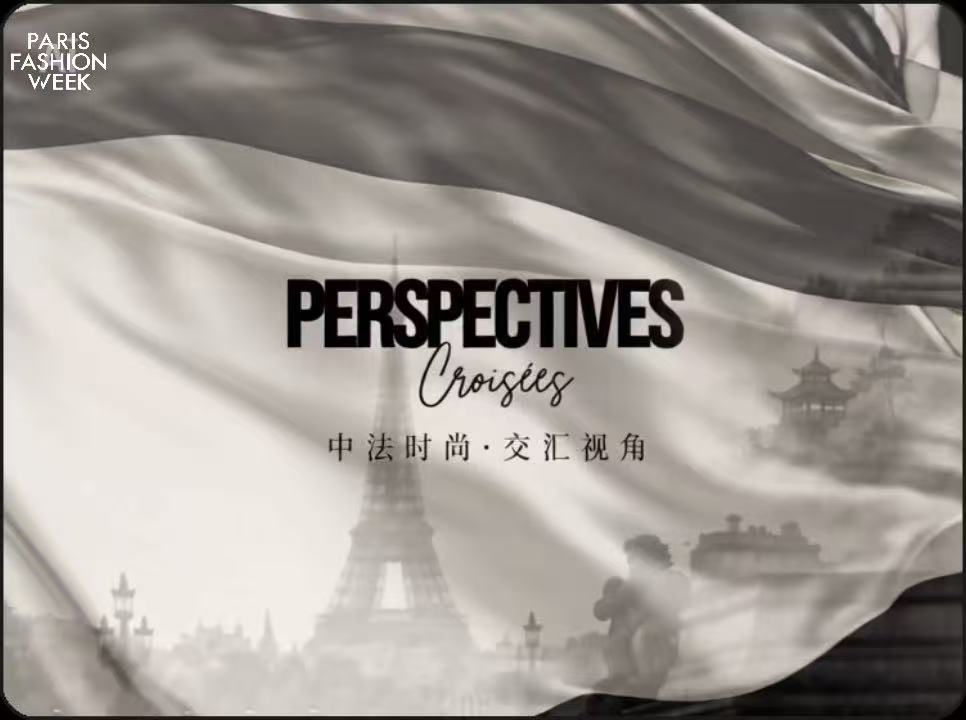
PERSPECTIVES CROISÉES Brings French and Chinese Fashion Heritage into Conversation in Paris
PARIS — 29 SEPTEMBER 2026
Amid the packed calendar of runway shows, collection launches and brand events during Paris Fashion Week, PERSPECTIVES CROISÉES chose to turn the focus back to what happens before a garment comes to life.
Not simply the final silhouette, but the process of learning. Not only the finished garment, but the stitches, repeated gestures and materials that pass through human hands before becoming clothing.
On 29 September, PERSPECTIVES CROISÉES, an initiative by MoDesign, presented a new edition at Hôtel Le Marois in Paris. This edition brought together the teaching of French couture techniques at Ateliers Alix and the fabrics, embroidery and ceremonial-wear craftsmanship of Chinese house TIANXI.
Two cultures and two fashion traditions came together through one shared idea:
Transmission.
From the Finished Garment Back to the Making
During Fashion Week, we are accustomed to seeing the final silhouette.
Yet the real story of a garment often begins long before it reaches the runway.
Founded by designer Mossi Traoré, Ateliers Alix presented a selection of work : Sleeve construction, cuffs, couture pocket-making techniques, neckline structures…
Technical details that usually remain hidden inside a finished garment were taken out of context and presented as objects worthy of attention in their own right.
By bringing together work from different stages of the curriculum, the presentation also made the progression of learning visible: understanding the construction of a garment, mastering a gesture, and gradually achieving greater precision in its execution.
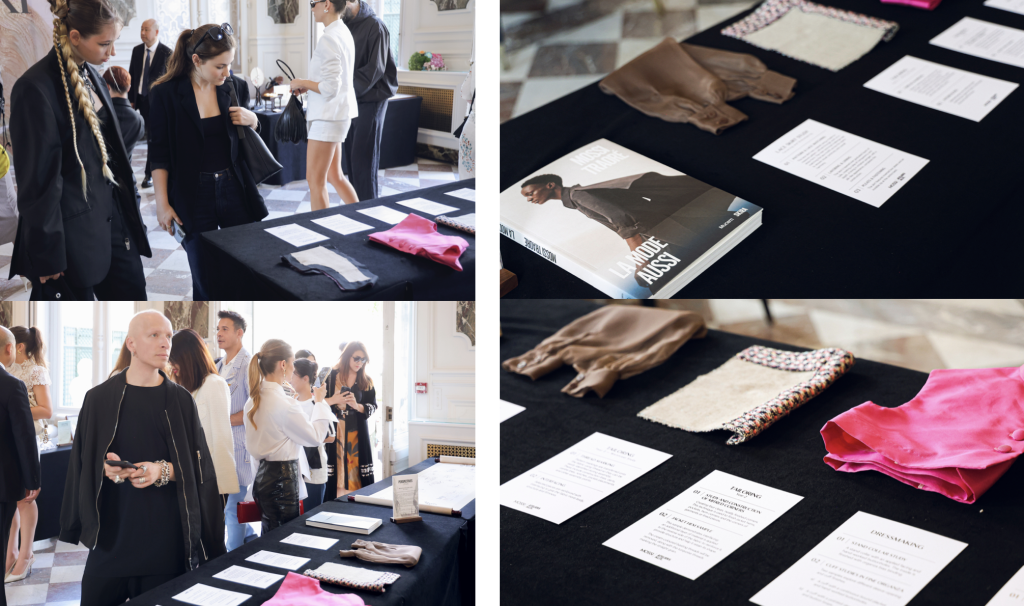
Here, savoir-faire was not treated as an abstract luxury term, but as an ability acquired through practice, repetition and time.
The role of the school therefore became central.
Craftsmanship can only continue to exist when it is taught, practiced and mastered again by a new generation.
From Material to the Final Chinese Silhouette
At the other end of the space, TIANXI approached the making of a garment from another perspective.
The house presented embroidery details, fabrics used in its ceremonial pieces and the gold threads involved in their construction alongside finished silhouettes.
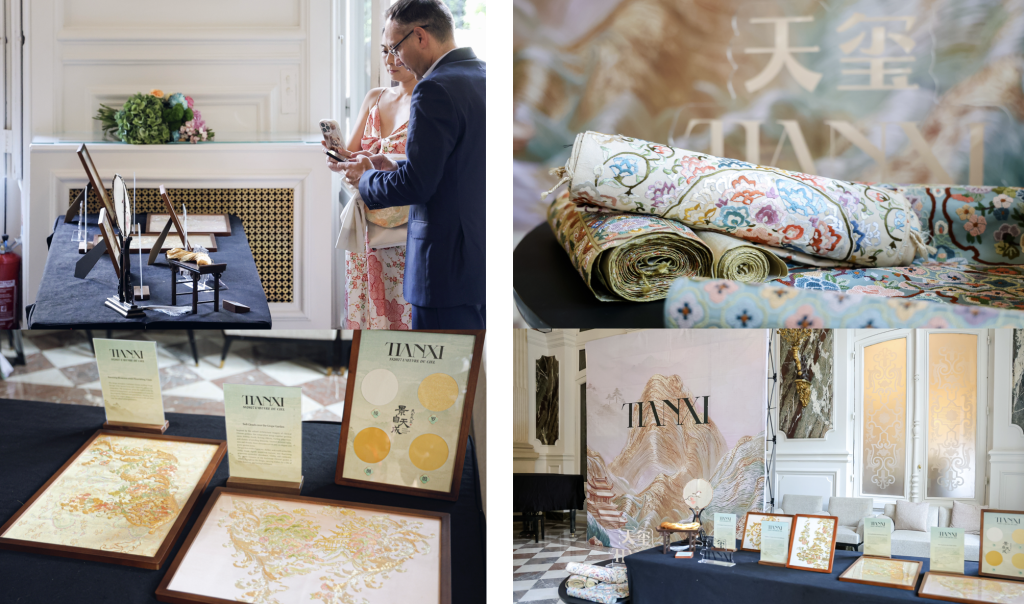
Visitors could first observe the texture of the materials at close range, see how light interacted with the embroidery and examine the treatment of the threads, before recognizing these elements again in the completed garments.
A Chinese ceremonial piece was therefore no longer presented simply as a visual result.
Material → Embroidery → Gesture → Silhouette
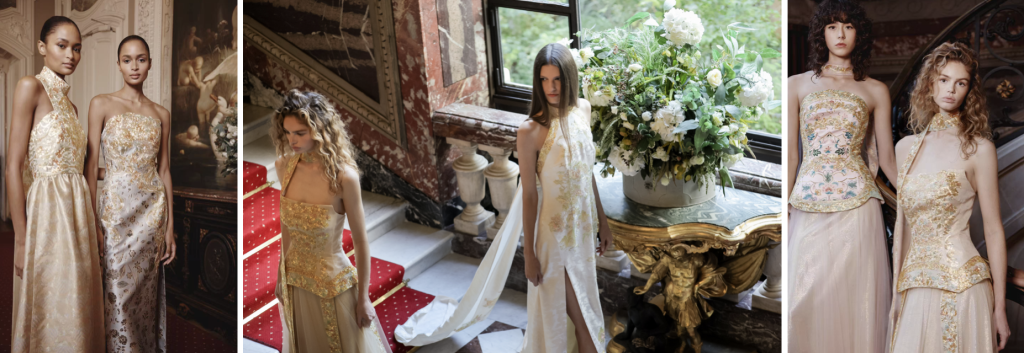
Material, craftsmanship and the human hand were brought back into the same narrative.
This is particularly important when working with traditional dress.
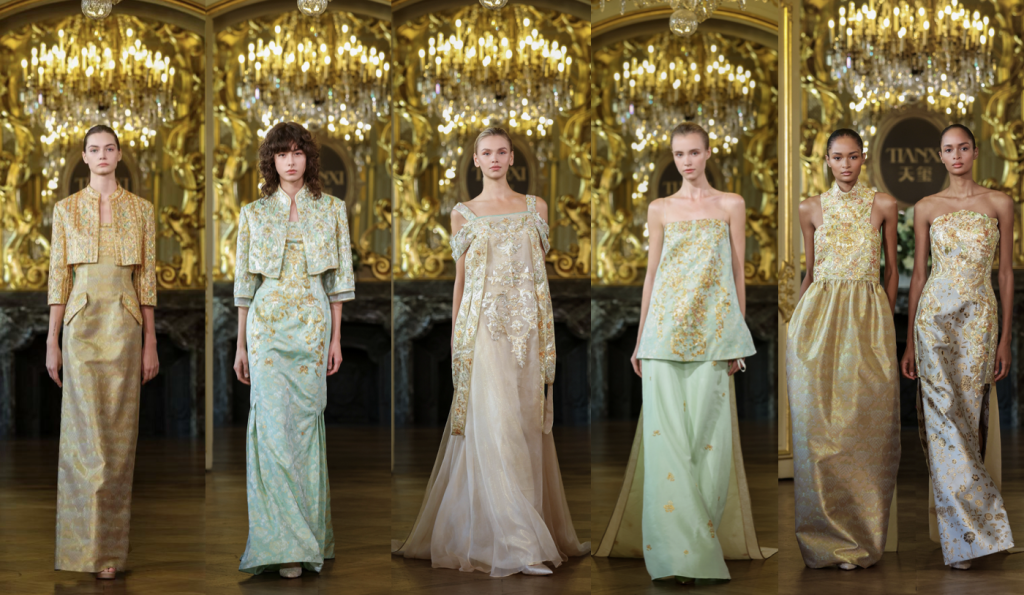
A meaningful contemporary interpretation is not simply about reproducing traditional symbols. It requires understanding why a technique exists, how it is performed, and how a designer can give it new relevance today.
When French Couture Meets Chinese Ceremonial Craftsmanship
Perspectives Croisées did not attempt to suggest that French and Chinese savoir-faire are the same.
On the contrary, it allowed their differences to remain visible.
On one side was couture technique transmitted through an educational system; on the other, craftsmanship rooted in Chinese ceremonial dress, embroidery, materials and contemporary interpretation.
Yet both are shaped by the same demands:
Precision.
Time.
Practice.
Transmission.
Attention to detail, respect for time and the passing of knowledge from one pair of hands to another.
This is what allowed the edition to move beyond a simple presentation of French and Chinese fashion.
Instead, it raised a question that feels increasingly relevant to the industry today:
As Fashion Moves Faster, How Do We Preserve What Can Only Be Learned Slowly?
Making the Audience Part of the Dialogue
The idea of exchange was not limited to the objects on display.
Upon arrival, each guest was invited to sign and take part in a stamping ritual.
One mark met another, overlapping and intersecting until together they created a new trace.
This simple gesture became a symbolic expression of the idea behind Perspectives Croisées:
Different cultures do not need to become the same in order to create a shared story.
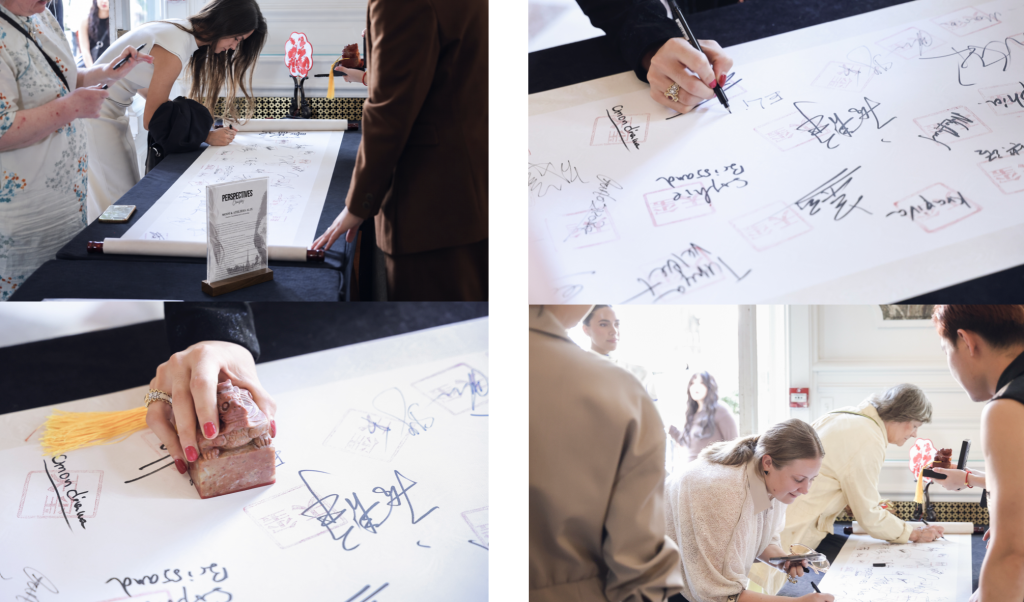
Moving from one space to another, visitors encountered both the technical exercises of French couture education and the materials and embroidery behind Chinese ceremonial dress.
The act of looking itself became part of the dialogue.
Three Years On, Perspectives Croisées Is Developing Its Own Language
Perspectives Croisées was initiated by MoDesign in 2024.
Since its first edition, the project has sought to create a space in Paris connecting French and Chinese designers, artisans, fashion houses, institutions and industry professionals.
Three years later, it is gradually developing a clearer approach.
Rather than simply placing “China” and “France” side by side as two labels, Perspectives Croisées looks for subjects through which the two fashion cultures can enter into a meaningful conversation.
Sometimes it is design.
Sometimes material.
Sometimes craftsmanship.
This time, it was transmission.
In an industry increasingly shaped by speed, images and instant communication, Perspectives Croisées chose to focus on what is less easily captured in a runway photograph:
Learning, time, the movement of the hand, and the transmission of knowledge from one person to another.
Because what can be passed on is never simply a garment.
It is the knowledge of how to create it.
⸻
PERSPECTIVES CROISÉES
French and Chinese Craftsmanship in Dialogue: From Technique to Creation
29 September 2026 · Paris
Initiated and organized by MoDesign
MOSSI I Ateliers Alix , TIANXI