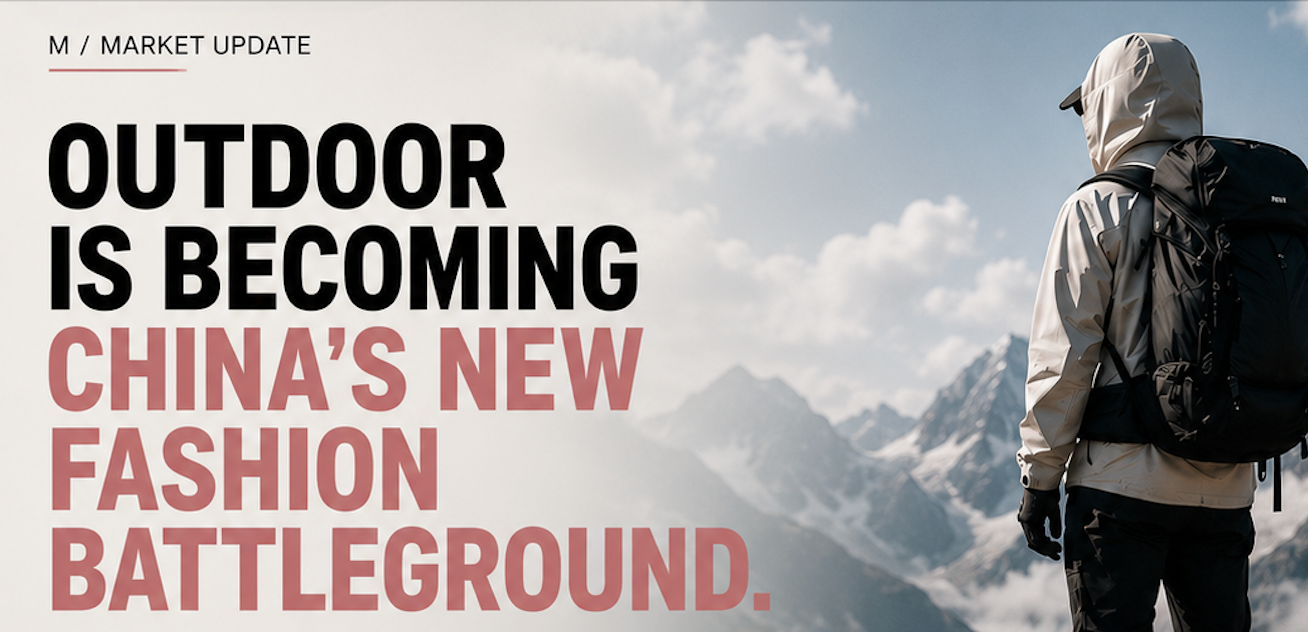
Outdoor Is Becoming China’s New Fashion Battleground
From technical performance to everyday lifestyle, China’s growing appetite for outdoor culture is reshaping the boundaries between sports, fashion and premium consumption.
M / MARKET UPDATE
For years, outdoor clothing in China was largely associated with function: hiking, climbing, skiing and other specialist activities.
That distinction is rapidly disappearing.
Technical jackets, trail-running shoes, performance layers and outdoor accessories are moving from mountains and hiking trails into the everyday wardrobes of consumers in Shanghai, Beijing, Chengdu and Shenzhen.
Outdoor is no longer just about going outdoors.
It is becoming a lifestyle — and increasingly, one of the most dynamic territories in China’s fashion market.
From Performance to Lifestyle
Chinese consumers are no longer buying outdoor products purely for technical purposes.
A shell jacket designed for the mountains can now be worn to work. Trail-running shoes have become part of urban wardrobes. Technical backpacks, fleece and performance fabrics increasingly coexist with designer fashion.
The boundaries are converging:
Outdoor × Sports × Fashion × Lifestyle
Performance remains important, but design, brand identity, cultural relevance and social visibility are becoming equally significant.
For a new generation of consumers, outdoor brands represent more than protection from the elements. They communicate ideas of nature, freedom, exploration and identity.
ANTA’s Growth Signals a Bigger Shift
The transformation is increasingly visible in corporate performance.
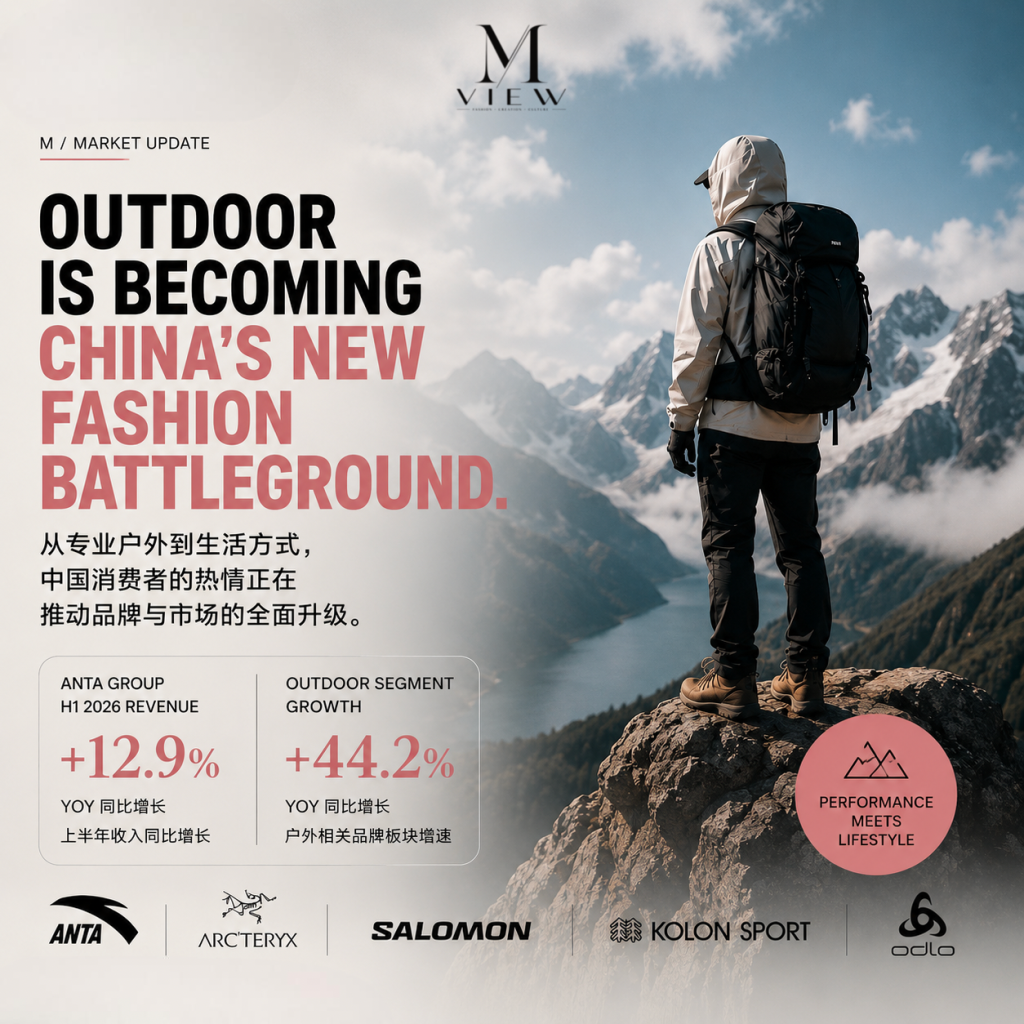
According to ANTA Sports’ H1 2026 results, group revenue increased 12.9% year-on-year, while its “all other brands” segment — including brands such as DESCENTE and KOLON SPORT — recorded revenue growth of 44.2%.
The figures point toward a broader shift: premium sports and outdoor consumption is becoming an increasingly important growth engine within China’s consumer market.
ANTA’s expanding brand ecosystem also offers a revealing picture of how the market is evolving.
From ANTA to Arc’teryx, Salomon, DESCENTE and KOLON SPORT, consumers are no longer navigating one homogeneous “sportswear” category. Instead, they are entering an increasingly sophisticated ecosystem spanning mass-market sportswear, technical performance, skiing, trail running and premium outdoor lifestyle.
Outdoor consumption is becoming more segmented — and more fashionable.
Why Is China Going Outdoors?
There is no single explanation.
In recent years, hiking, camping, cycling, skiing, trail running and other outdoor activities have become increasingly integrated into urban lifestyles.
At the same time, social media has transformed how outdoor culture is represented.
A hiking destination, a pair of trail shoes or a technical jacket can simultaneously represent performance, personal style and shareable visual content.
As a result, “going outdoors” and “dressing outdoor” are becoming two related but increasingly independent behaviours.
Consumers do not necessarily need to climb a mountain to appreciate the aesthetics, technology or cultural identity associated with outdoor products.
When Arc’teryx and Salomon Become Fashion Symbols
Perhaps the clearest indication of this transformation is the cultural reach achieved by brands originally built around specialist performance.
Arc’teryx technical shells and Salomon trail shoes, for example, have moved far beyond their original outdoor communities and become recognizable elements of contemporary fashion.
This development is closely connected with the global rise of Gorpcore, where technical materials, utilitarian construction and performance-driven silhouettes have entered mainstream style.
China, however, gives this movement another dimension.
Its enormous urban consumer base, rapidly developing outdoor culture and growing appetite for premium technical products are turning the country into an increasingly important competitive market for global outdoor brands.
Why Luxury Fashion Should Pay Attention
The outdoor boom is not simply a battle between sportswear companies.
It also matters to the traditional fashion and luxury industries.
As consumers place greater value on comfort, functionality, durability and real-life usability, fashion brands are being pushed to reconsider the relationship between design and performance.
Technical fabrics, sneakers, down jackets, ski collections and outdoor collaborations have already become increasingly visible across luxury fashion.
The next competition, therefore, may not simply be:
Fashion vs. Outdoor.
The more important question is:
Who can best combine performance, design and lifestyle?
What Comes Next for China’s Outdoor Market?
The most important question is not how long a particular jacket or shoe will remain fashionable.
It is whether outdoor is becoming a permanent lifestyle category in China.
If it is, the implications extend far beyond sportswear.
International outdoor brands will continue competing for Chinese consumers. Domestic players will invest further in design, technology and brand identity. Fashion houses will increasingly explore performance-driven categories, while consumers themselves will become more sophisticated in distinguishing between technical credibility, design, cultural relevance and brand storytelling.
The result could be a new competitive landscape in which the traditional boundaries between fashion, sportswear and outdoor culture matter less and less.
The next fashion battleground may not be the runway. It may be the outdoors.
M VIEW — News, people and ideas shaping fashion tomorrow.